blog
The Bird Nest
PRODUCTION
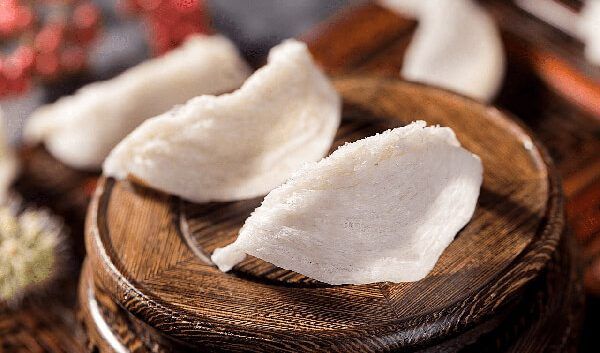
Bird nests, particularly those produced by swiftlets, are a highly prized delicacy known for their remarkable nutritional and medicinal benefits. These nests are made from the hardened saliva of swiftlets, which are small, insect-eating birds found primarily in Southeast Asia. The unique composition of bird nests, primarily composed of proteins, minerals and essential amino acids, has earned them a reputation as a sought-after ingredient in traditional Chinese medicine and luxury culinary dishes, especially in the form of bird’s nest soup.
BIRD NEST PRODUCED
Swiftlets build their nests in sheltered, dark environments, typically in caves or specially constructed swiftlet houses. The production of bird nests is fascinating and delicate process that requires expert management of the swiftlet habitat. To ensure optimal conditions for swiftlet nesting and saliva secretion, swiftlet houses are designed to replicate the natural cave environments where these bird thrive. The houses must maintain a stable temperature, humidity and minimal external disturbances to encourage swiftlet habitation and nest-building activities.
During the nesting period, the swiftlets use their saliva to create a sticky, fibrous nest, which solidifies over time. The nests are primarily composed of glycoproteins, essential minerals and amino acids, which are beneficial for human consumption. These nests are typically constructed in layers, with the female swiftlet laying one or two eggs within each nest. After the eggs hatch, the swiftlets will feed their young with regurgitated saliva, further contributing to the nest’s structure.
Swiftlet houses are managed by experienced bird nest cultivators who oversee the bird’s health and nesting patterns. The nests are left undisturbed in the swiftlet houses until they are ready for harvets. This process requires careful monitoring of the swiftlet population and the nesting cycle to ensure optimal conditions for nest production.

HEALTH BENEFITS OF BIRD NESTS
Bird nests are widely recognized for their numerous health benefits, making them a coveted ingredient in traditional medicine, particularly in Asia. Consuming bird nests is believed to offer a variety of therapeutic properties, largely due to their rich nutrient content. Some of the notable health benefits include :
- Boosting Immune Function : Bird nests are a rich source of proteins, including essential amino acids, that are vital for the body’s immune system. The consumption of bird nests is believed to help strengthen the body’s natural defenses against illness and infections.
- Promoting Skin Health : The glycoproteins found in bird nests are known to stimulate collagen production in the skin, promoting elasticity and reducing the appearance of fine lines and wrinkles. As a result, bird nests are often sought after for their anti-aging properties and their ability to maintain youthful, glowing skin.
- Enhancing Respiratory Health : Bird nests have been traditionally used to treat respiratory conditions such as coughs and asthma. The nutrients in the nests are thought to help soothe the respiratory tract, reduce inflammation and improve lung function.
- Supporting Digestive Health : The enzymes present in the bird nests are believed to aid in digestion and promote the overall health of the gastrointestinal system. Bird nests are often consumed to help alleviate digestive discomfort and support gut health.
- Increasing Energy and Vitality : Bird nests are considered an excellent natural source of nourishment, offering an energy boost and improving overall vitality. The nutrients in the nests help in replenishing the body’s reserves, leading to increased stamina and endurance.
- Supporting Overall Well-being : Regular consumption of bird nests is also believed to contribute to better overall health by promoting mental clarity, reducing stress and improving sleep quality, thereby enhancing the quality of life.


HARVEST BIRD NESTS
The timing of bird nest harvesting is critical to ensure the collection of the highest quality nests. The ideal harvesting period depends on the swiftlet’s nesting cycle and the maturation of the nest. Typically, swiftlet nests are harvested after the nesting cycle is complete, which generally occurs within a span of 35 to 45 days from the time the swiftlets start building the nest.
There are typically two main harvests per year, corresponding with the swiftlet breeding seasons. The first harvest usually takes place after the first cycle of nesting in the year, while the second harvest occurs after the birds have completed their second cycle of nest-building.
Harvesting involves careful removal of the nests from the swiftlet houses, ensuring that no damage is done to the structure or integrity of the nest. The nests are then cleaned to remove any residual feathers or impurities before being dried and processed. The drying process is typically done using controlled methods to preserve the nest’s nutritional properties and ensure that it retains its premium quality.
In some cases, swiftlets may produce “new nests” in the second cycle, which are of higher quality, containing more dense saliva, while the nests from the first cycle may be lighter and less rich in nutrients. Hence, the timing of harvest directly impacts the nutritional value and market demand for the bird nests.
Bird nests are not only an exotic culinary treat but also an esteemed product in the realm of traditional medicine and wellness. Their production requires precise environmental management to ensure the health and well-being of the swiftlets, which ultimately affects the quality and benefits of the nests. With their rich nutrient content and numerous health benefits, bird nests have become a industry evolves, producers like Yan Nest Berhad are committed to ensuring sustainable and responsible practices, maintaining the integrity of the bird nest production process while delivering a product that supports consumer health and well-being worldwide.
Industry Update
Malaysia’s Edible Bird’s Nest Industry: A Look at National and Sabah Production
Malaysia’s valuable edible bird’s nest industry continues to be a significant contributor to the nation’s economy, with tens of thousands of swiftlet houses operating nationwide. While precise, up-to-the-minute official statistics remain fluid, recent data and industry reports provide a strong indication of the sector’s scale. As of early 2025, Malaysia exports over 30 tonnes of bird’s nests to China monthly, with a reported 102.1 tonnes shipped in the nine months leading up to March 2025.
Looking back at recent years, Malaysia aimed for a production target of 860 metric tons by 2020. In 2019, the country’s bird’s nest exports were valued at RM1.15 billion, with projections to reach RM3 billion. Industry analyses from 2021 positioned Malaysia as the world’s second-largest producer, with an annual output of approximately 600 tons.
The backbone of this industry is a vast network of swiftlet houses. Estimates on the exact number vary. A December 2024 report indicated over 30,000 swiftlet farmhouses are operational in Malaysia. However, other sources from 2017 and 2020 have suggested a higher figure, around 60,000 premises. This discrepancy may reflect differences in registered versus unregistered operations.
Sabah’s Contribution to the Market
The state of Sabah is a key player in the national bird’s nest industry. In 2021, the farmed nest sector in Sabah was estimated to be a burgeoning RM350 million per year industry. The state government set an ambitious target to produce 100 tons of bird’s nests annually by 2023. Historically, Sabah’s export value from both cave and farmed nests has ranged between RM13 million and RM17 million annually.
In terms of infrastructure, a 2018 report stated there were approximately 4,000 swiftlet houses in Sabah, though only 1,532 were officially registered at the time. A more recent comparative study in December 2022 noted that Sabah has a higher number of swiftlet houses than its neighbour Sarawak, though a precise total for Sabah was not provided. The study, which sampled 91 houses across both states, focused on the distribution of these structures, with a significant percentage located in agricultural areas. This suggests a continued and likely growing presence of swiftlet farming in the state.
Big News !
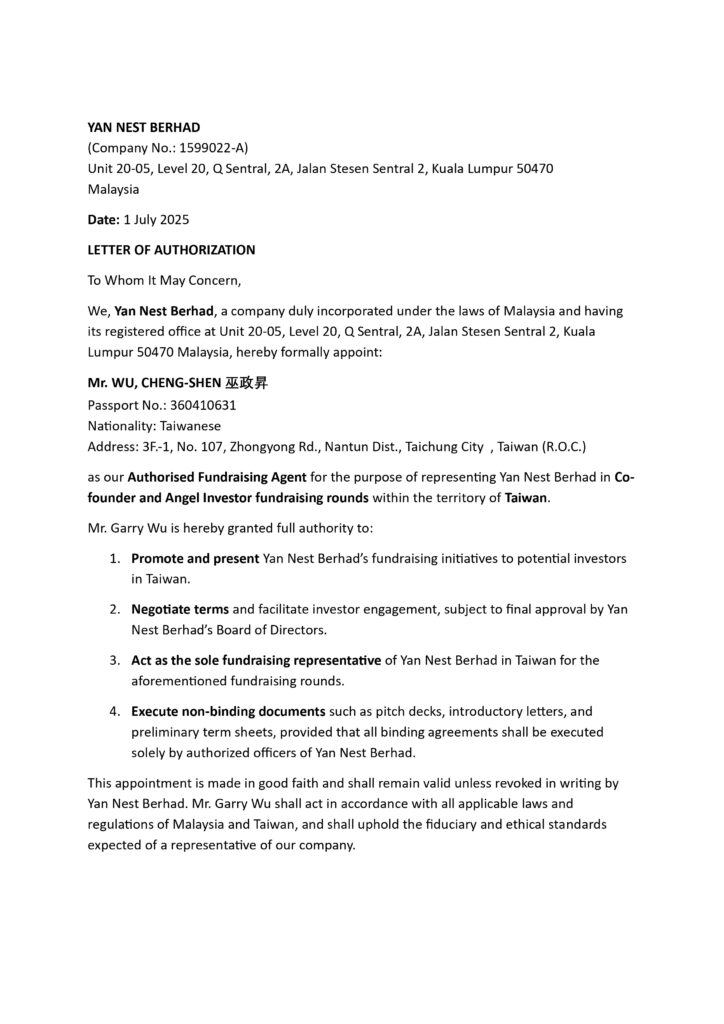
Yan Nest Berhad Announces Mr. Gary Wu as Taiwan’s Exclusive Authorised Fundraiser
We are pleased to officially appoint Mr. Gary Wu (巫政昇) as our Authorised Fundraising Agent for the purpose of representing Yan Nest Berhad in Co-founder and Angel Investor fundraising rounds within the territory of Taiwan.
Gary is appointed as the exclusive authorized fundraiser in Taiwan to promote YNB’s fundraising initiatives, engage potential investors and execute non-binding documents, all subject to final approval by YNB’s Board of Directors.
Stay tuned for updates on exciting new initiatives under Mr. Gary’s leadership!
Mangrove Forests: Pillars of Sabah’s Blue Economy

Frederick said mangroves are a critical part of this conservation framework.
Kota Kinabalu: Mangrove forests are no longer just an environmental asset but should be mainstreamed as pillars of Sabah’s blue economy, said Sabah Forestry Department (SFD) Chief Conservator of Forests Datuk Frederick Kugan.
Speaking at the 3rd Asean Blue Economy Forum 2025 at the Sabah International Convention Centre, recently, Frederick said Sabah’s forest landscape and highlighted the strategic role of mangroves in the state’s economic and ecological future.
“Sabah has about 7.4 million hectares of land, with 63 per cent still forested, amounting to some 4.6 million hectares.
“Of this, 3.8 million hectares are Permanent Forest Estates and 3.6 million hectares are forest reserves, with 1.9 million hectares allocated for production forest.
“Meanwhile, 2.012 million hectares have been gazetted as Totally Protected Areas. Under the Sabah Forest Policy 2018, we aim to raise this to at least 30 per cent, or 2.2 million hectares, by 2025,” he said.
Frederick said mangroves are a critical part of this conservation framework.
“Sabah boasts the largest mangrove estate in Malaysia, covering about 365,642 hectares, which is 60 per cent of the nation’s total.
“Nine in 10 hectares remain intact, with 308,824 hectares gazetted under seven forest reserve classes, including protection forests, mangrove reserves, and wildlife reserves.
“Another 60,000 hectares are outside formal protection but could be secured in the future,” Frederick said.
He described mangroves as “economic pillars, not just swamps at the water’s edge,” noting their wide-ranging functions.
“Mangroves sequester up to four times more carbon per hectare than other forests, sustain fisheries, shield our coastlines, support tourism, and provide food and livelihoods for communities,” he said.
Mangroves underpin sectors from aquaculture and forestry to eco-tourism and non-timber forest products.
“Forests, including mangroves, are the pillars of Sabah’s economy. They support industries, communities and biodiversity alike,” he added.
The Chief Conservator said Sabah’s policy framework supports mangrove conservation.
The Forest Enactment 1968 provides the legal basis for declaring reserves and enforcing protection, while the Sabah Forest Policy 2018 sets conservation targets and encourages revenue diversification through carbon financing, ecotourism and community forestry.
The recently launched Sabah Mangrove Action Plan 2024–2033 aims to protect vulnerable mangroves, strengthen climate resilience, and involve communities in management.
Frederick highlighted Strategy 4 of the Action Plan, which calls for coastal adaptation and mitigation, no-development foreshore zones, climate awareness, and research-driven community resilience.
“This is not just about trees; it is about people and livelihoods. Communities living next to mangroves must be part of the solution,” he said.
Sabah has a long history of mangrove rehabilitation dating back to the Eighth Malaysia Plan (2003-2008).
Frederick noted that some areas were degraded by agriculture, infrastructure or illegal extraction, and ongoing restoration efforts involve international partners, including Japan.
New opportunities in carbon projects and payment for ecosystem services could provide the financial sustainability needed for long-term conservation.
He also warned of persistent threats from conversion to plantations, infrastructure development, unsustainable aquaculture, illegal extraction, human settlements and climate change.
“These threats are not new, but they remind us why mainstreaming conservation into all sectors is critical,” he said.
Frederick highlighted the financial challenges of mangrove conservation.
“The Forestry Department requires at least RM100 million every year to manage forests, including mangroves, and even that is not enough.
“Conservation is costly, which is why conservation must pay. We must make mangroves worth more standing than cleared,” he added.
He concluded by urging all stakeholders to see mangroves as part of Sabah’s economic future, not a barrier to development.
“Managing forests today is not just about timber, but about sustainability and people. Unlocking these seas of opportunity will bring long-term economic returns, strengthen resilience and create lasting benefits for future generations to save the greatest good for the greatest number,” Frederick said.
The plenary he presented, titled “Mainstreaming Mangrove Forests as Pillars of the State’s Blue Economy” underscored the regional significance of mangroves as both environmental infrastructure and economic assets.
Source: Daily Express | Published: October 03, 2025 | Author: Sisca Humphrey
Strategic Update
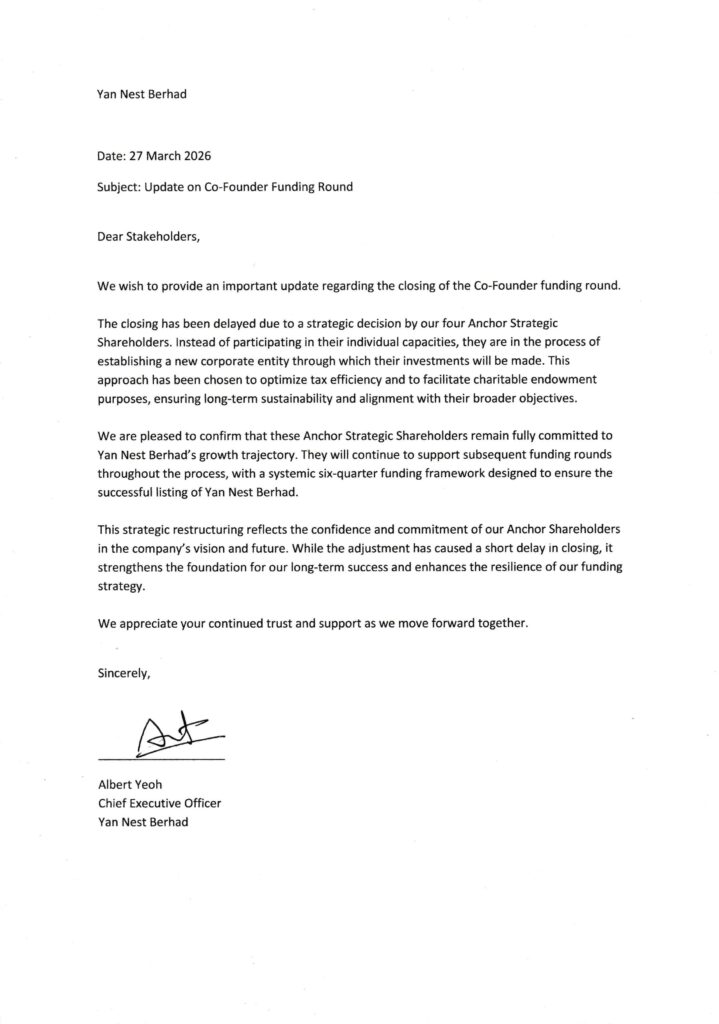
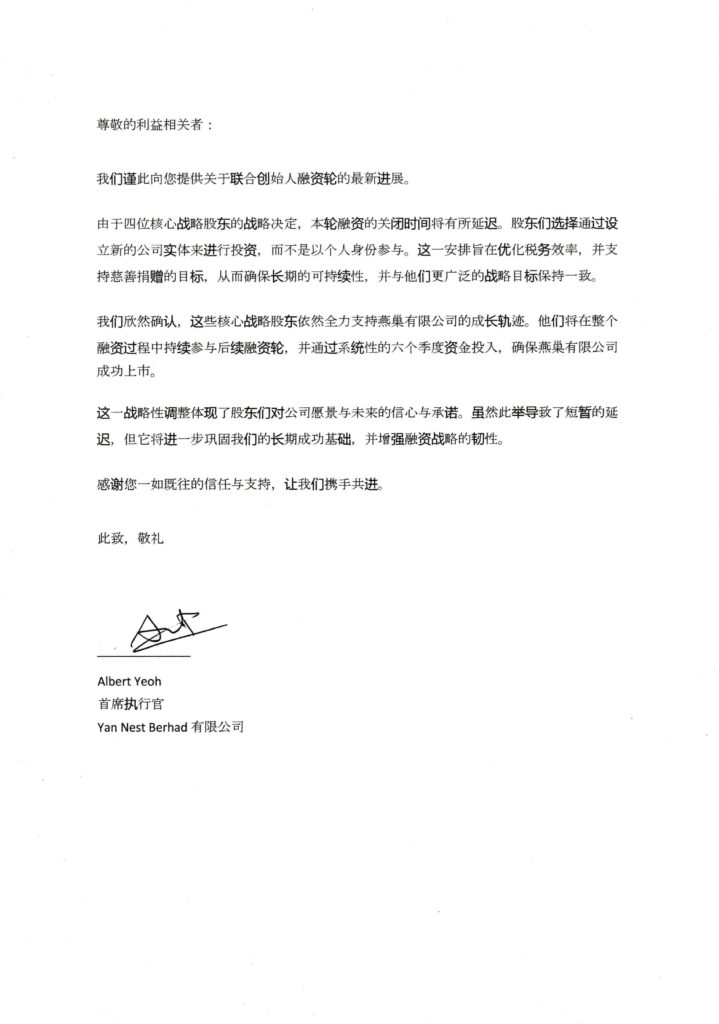
Update on Co-Founder Funding Round
Following a strategic decision by our four Anchor Strategic Shareholders, we are providing an update on the progress of our Co-Founder funding round.
This restructuring—aimed at optimizing tax efficiency and long-term sustainability—establishes a system six-quarter funding framework to ensure the successful listing of Yan Nest Berhad.
Please refer to the official statement below for full details: